 The Marketer
Minimalism has become more than just an aesthetic trend—it’s a lifestyle philosophy embraced across cultures. Few brands have captured and exported this ethos as successfully as Muji, the Japanese retailer known for its “no-brand” approach. While most companies fight to make their logos bigger and their designs louder, Muji has built a global empire by stripping things down to their quiet essentials.
In this article, we’ll explore how Muji’s marketing strategy leverages minimalism not just as a design choice, but as a powerful global branding tool. From packaging to store design, Muji proves that sometimes less really is more.
The Philosophy of “No Brand, Quality Goods”
Muji’s Japanese name—Mujirushi Ryohin, which translates to “no-brand, quality goods”—is the foundation of its identity. The company rejects flashy branding and instead emphasizes functional, sustainable, and affordable products.
Where many retailers market aspiration, Muji markets clarity and simplicity. By removing the clutter of logos and loud advertising, the brand communicates a subtle message: what matters is not who made it, but how well it serves your life.
This anti-brand stance, ironically, has become one of the most recognizable branding strategies in the world. Muji’s neutral design language is instantly associated with calm living, thoughtful consumption, and Japanese modernity.
Store Experience as Marketing
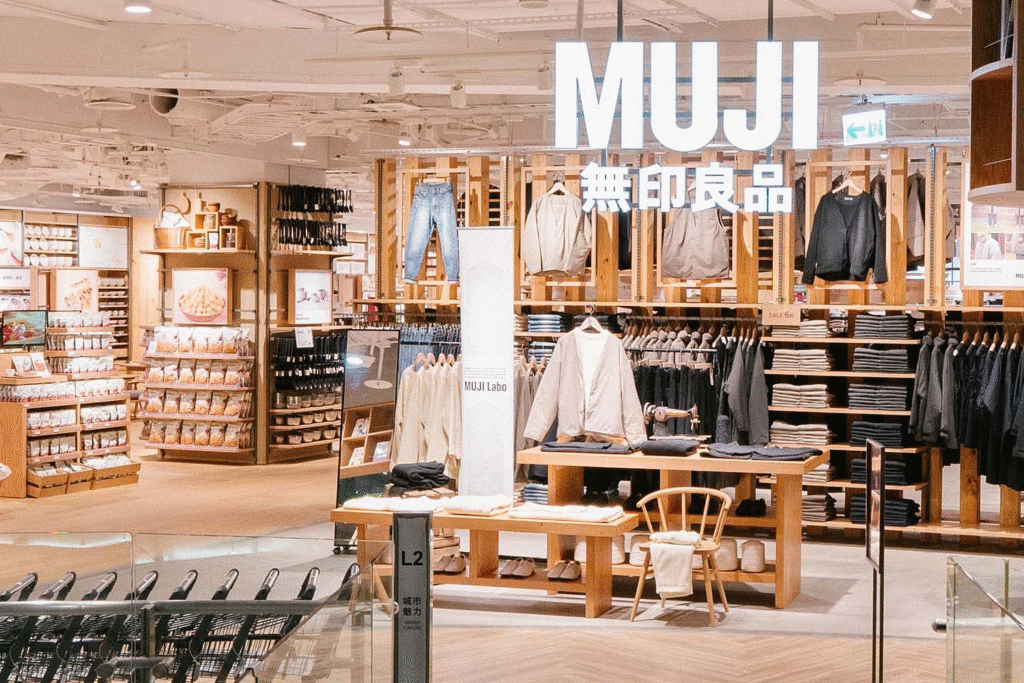
Walk into a Muji store in Tokyo, London, Singapore, or New York, and you’ll notice something consistent:
- Natural wood, white walls, and soft lighting create a serene environment.
- Products are displayed with almost Zen-like simplicity.
- Spaces feel more like lifestyle galleries than traditional retail shops.
This immersive design isn’t accidental. Muji understands that its stores are marketing tools in themselves. The calm and consistent retail environment embodies the values of the brand, turning every shopping trip into an experience that reinforces its minimalist philosophy.
For international markets, Muji localizes without losing this essence. In Asia, Muji cafés emphasize health-conscious food. In Europe, larger stores often highlight home furnishings and organization solutions. The adaptability allows Muji to stay relevant while maintaining its signature style.
Marketing Without Traditional Advertising
One of the most fascinating aspects of Muji’s global rise is its avoidance of traditional advertising campaigns. Instead of investing heavily in billboards and commercials, Muji relies on word-of-mouth, customer loyalty, and experiential branding.
When Muji does run campaigns, they tend to focus on concepts rather than products. For example, instead of spotlighting a single chair, Muji communicates the idea of a home filled with balance, function, and calm. This creates an emotional connection that resonates across cultures, especially among consumers tired of over-marketed lifestyles.
Minimalist Packaging as Brand Identity
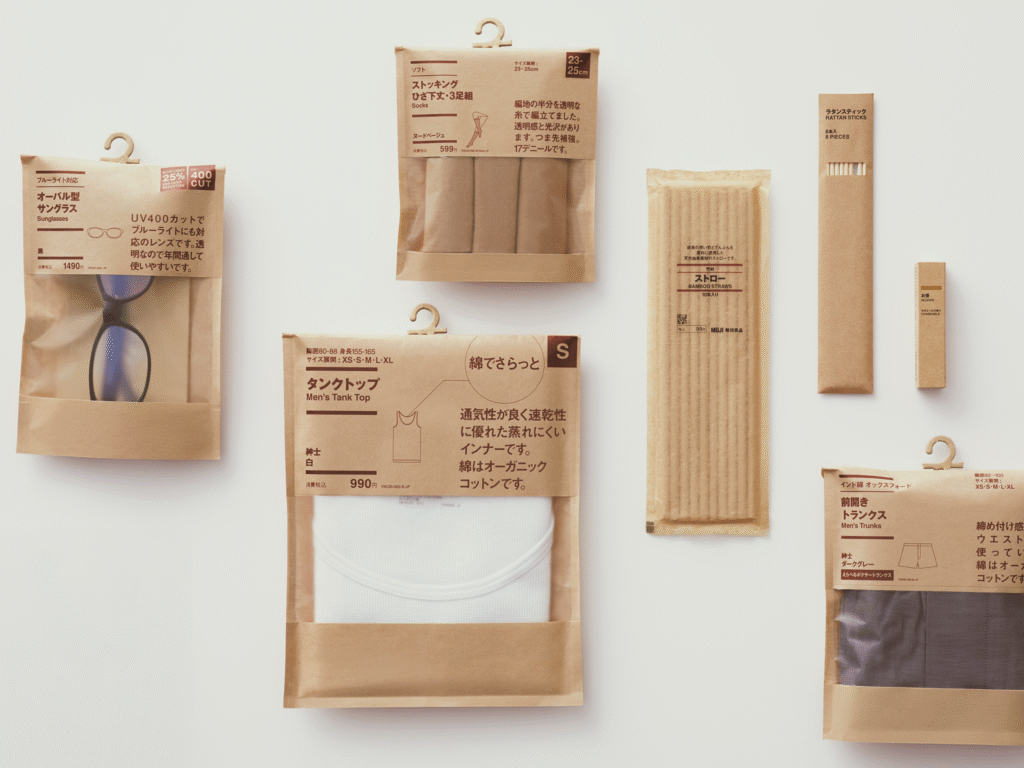
Muji’s packaging is perhaps its most visible form of marketing. Plain kraft paper, simple labels, and neutral tones speak volumes without saying much at all. The lack of logos forces the product itself to take center stage, and consumers interpret this as authenticity.
In a world of crowded shelves and digital ads, Muji’s “quiet” products stand out precisely because they don’t scream for attention. This makes them particularly appealing to Millennials and Gen Z consumers, who increasingly value subtlety, sustainability, and design integrity.
Local Adaptation With Global Consistency
What makes Muji especially interesting is how it manages to adapt globally without losing its DNA.
- In China, Muji emphasizes affordability to compete with domestic rivals, while still positioning itself as a lifestyle brand.
- In Europe, Muji leans into sustainability and eco-friendly messaging, aligning with cultural values around conscious consumption.
- In Southeast Asia, Muji cafés and lifestyle concepts are used to expand its reach beyond retail, tapping into the food and wellness market.
Despite these adaptations, the core principle—minimalism as a way of life—remains constant. This balance of global consistency and local flexibility has been key to Muji’s international appeal.
Minimalism as a Lifestyle Movement
Muji doesn’t just sell products—it sells a worldview. By embracing simplicity, decluttering, and sustainability, the brand has positioned itself as a cultural ambassador of minimalism.
This has allowed Muji to go beyond retail into services like:
- Muji Hotel in China and Japan, which extends the lifestyle into hospitality. Interior design services, helping customers bring Muji’s minimalist ethos into their homes.
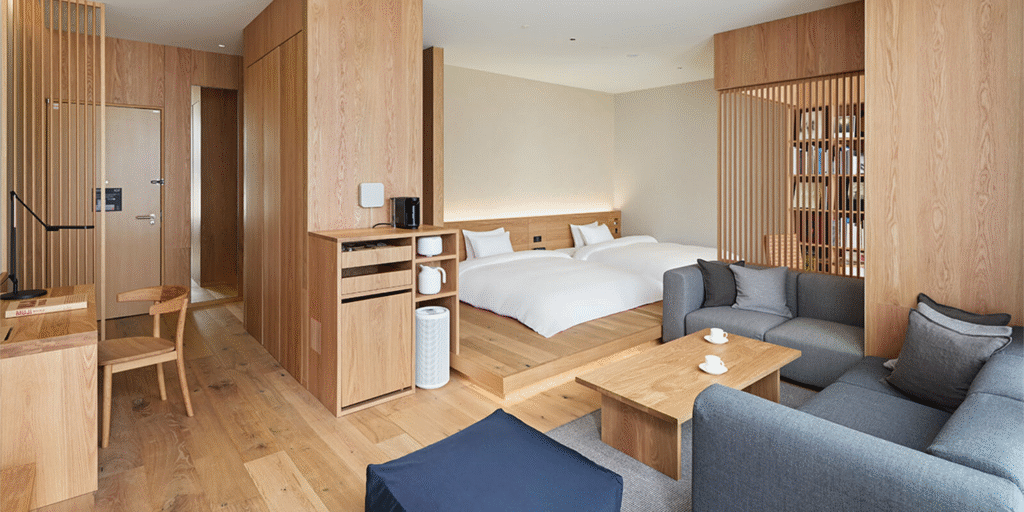
- Muji Diner (or Café&Meal MUJI), offering wholesome meals aligned with the brand’s philosophy of simple living.

Through these initiatives, Muji blurs the line between retail and lifestyle, creating a holistic brand ecosystem.
Why Muji’s Minimalist Marketing Works Globally
At its core, Muji proves that restraint can be a powerful form of branding. The global appeal of Muji lies in its ability to connect with universal human desires: peace, balance, and authenticity.
Consumers in different countries may interpret Muji slightly differently—Japanese heritage in Asia, sustainable design in Europe, modern simplicity in the U.S.—but they all connect to the underlying story of less is more.
In an era of overwhelming consumer choice and hyper-targeted marketing, Muji’s simplicity feels refreshing. Its minimalism is not just an aesthetic—it’s a marketing strategy that transcends cultures.
Key Takeaways for Marketers
Muji’s global success offers valuable lessons:
- Philosophy Matters More Than Products: By anchoring its brand in a lifestyle philosophy, Muji creates emotional resonance across markets.
- Experiential Branding Is Powerful: Stores, packaging, and services all serve as touchpoints for Muji’s minimalist identity.
- Subtlety Can Differentiate: In a noisy market, quiet design and restraint can stand out more effectively than loud campaigns.
- Adapt Locally, Stay Consistent: Globally Muji’s ability to tailor its approach to local markets while staying true to its DNA is a model for global marketing.
Final Thoughts
Muji’s story is a rare case where anti-branding becomes branding, and where simplicity becomes a powerful form of global marketing. By refusing to play by the usual rules of flashy campaigns and aggressive promotion, Muji has carved out a distinct identity that resonates from Tokyo to London to Bangkok.
In a marketplace saturated with logos and slogans, Muji reminds us of a timeless truth: sometimes the strongest brand statement is the quietest one.
